


The Hidden Administrative Work Behind Hospice Volunteer Programs
The Work You Don’t See
Still Needs to Get Done.

Behind Every Volunteer Visit
The work that keeps a hospice volunteer program running
One volunteer program. Many moving parts.
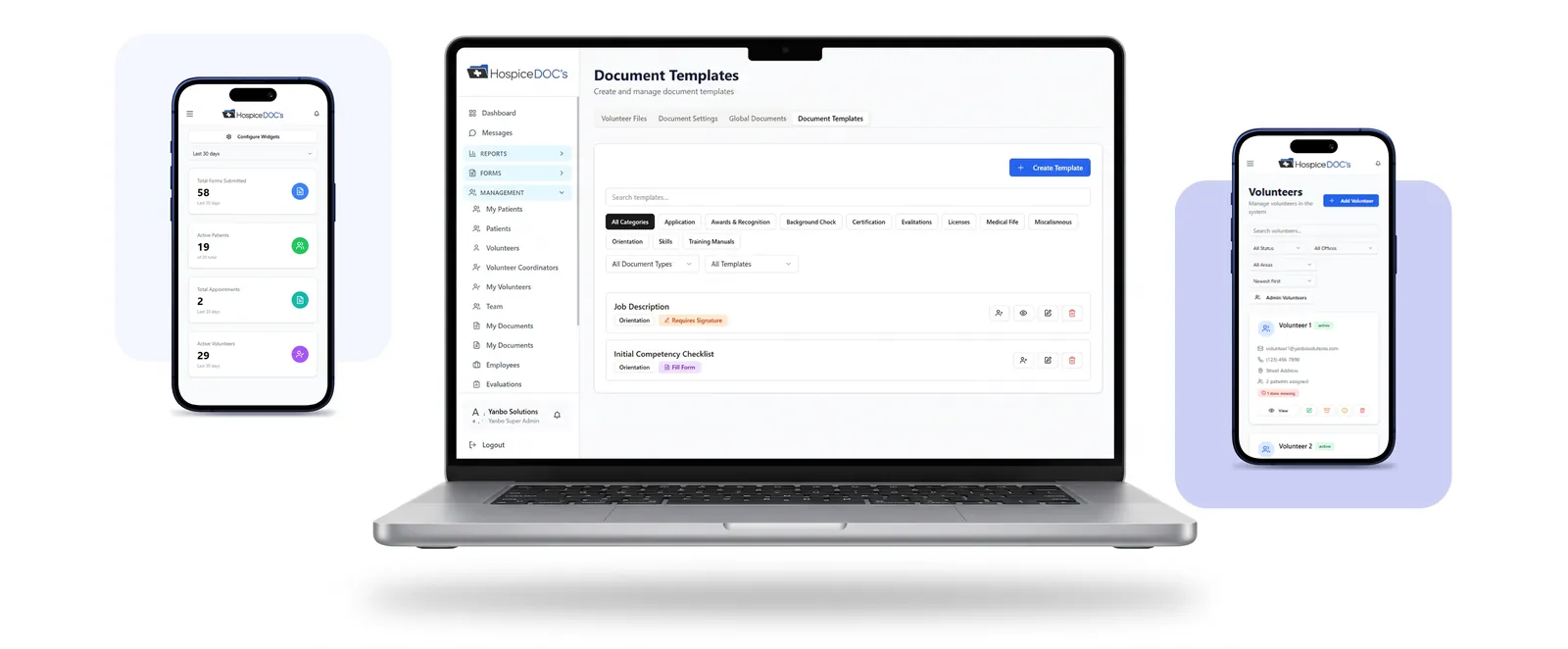
Behind every volunteer visit is a series of connected responsibilities. From onboarding and training to scheduling, documentation, and reporting, coordinators keep each part of the program organized so volunteers can focus on the people they serve.

What It Really Takes to Manage a Hospice Volunteer Program
Hospice volunteers provide something that cannot be measured in hours alone: companionship, presence, practical help, and meaningful support for patients and families. But behind every volunteer visit is a considerable amount of coordination, documentation, and follow-through that often goes unnoticed.
Recruiting volunteers is only the beginning. Before a volunteer can begin serving, applications must be processed, orientation and training completed, required documentation collected, and records organized. Once volunteers become active, coordinators must manage assignments, schedules, activities, evaluations, and ongoing program requirements.
For many hospice volunteer coordinators, these responsibilities compete for time with another important part of the job: supporting the volunteers themselves.
The Work Behind Every Volunteer
Consider what happens before a new volunteer completes their first patient visit.
An applicant expresses interest in volunteering. Someone must review the application, explain the program’s expectations, coordinate interviews or screening, arrange orientation, track training, obtain required documentation, and determine when the individual is ready to begin.
Each of these steps may involve a different form, document, email, calendar entry, or follow-up.
And that is just one applicant.
In an active hospice volunteer program, coordinators may be managing applicants at different stages while simultaneously supporting established volunteers, scheduling visits, responding to changes, and preparing reports.
The challenge is not necessarily that any individual task is unusually difficult. It is the cumulative workload of managing many interconnected responsibilities – often across several systems.


Volunteer Coordination is Also a Compliance Responsibility
Hospice volunteer programs operate within a regulatory framework that requires more than simply having volunteers available.
Under 42 CFR §418.78, Medicare-certified hospices must maintain and document volunteer orientation and training, demonstrate ongoing recruitment and retention efforts, document cost savings associated with volunteer services, and maintain records of volunteer activities and time worked.
The regulation also establishes the requirement that qualifying volunteer administrative and direct patient care services equal at least 5% of the total patient care hours of paid hospice employees and contract staff.
This means volunteer coordination involves maintaining information that must be accurate, organized, and available when needed.
A coordinator may need to determine:
- Which volunteers are active and eligible for particular assignments?
- Who has completed required training and documentation?
- Which records need updating?
- Have visits and volunteer activities been documented?
- Are volunteer hours being recorded consistently?
- Can information be retrieved efficiently for a report or review?
These are not occasional administrative questions. They are part of the ongoing operation of a hospice volunteer program.
When Small Tasks Become a Significant Workload
Administrative work rarely arrives as one large project. More often, it is spread throughout the day.
A volunteer needs to reschedule a visit. An applicant has not completed orientation. A training record needs updating. A coordinator needs to verify that an activity was documented. An administrator requests a report.
Each task requires attention, and each interruption can create additional follow-up.
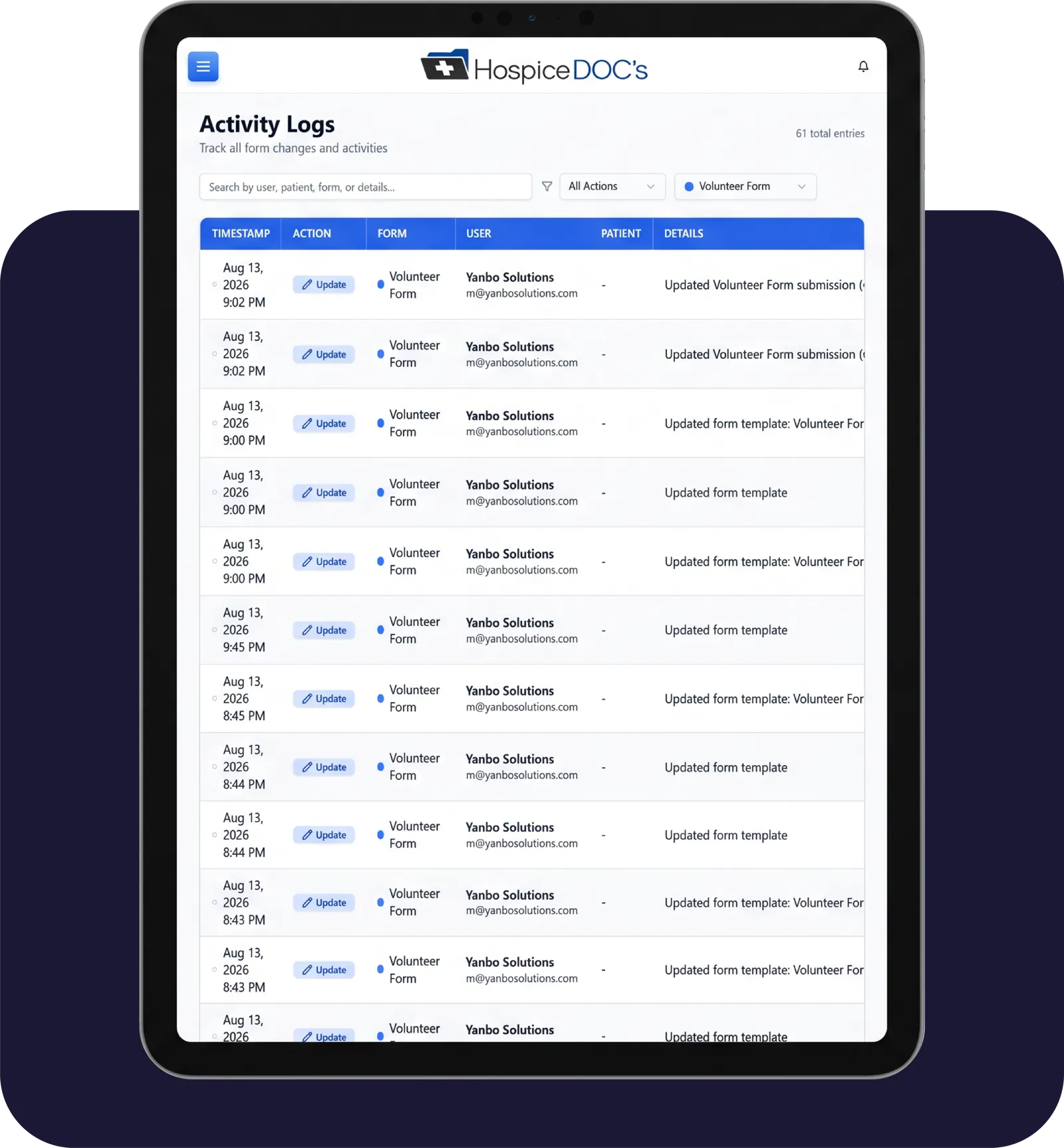
The workload becomes even more complicated when information lives in separate places.
A volunteer’s contact information may be stored in a spreadsheet, training records in shared folders, schedules in a calendar, and visit notes in another system.
Even when each individual system works, coordinating information between them requires time and creates opportunities for inconsistencies.

The Cost of Administrative Fragmentation
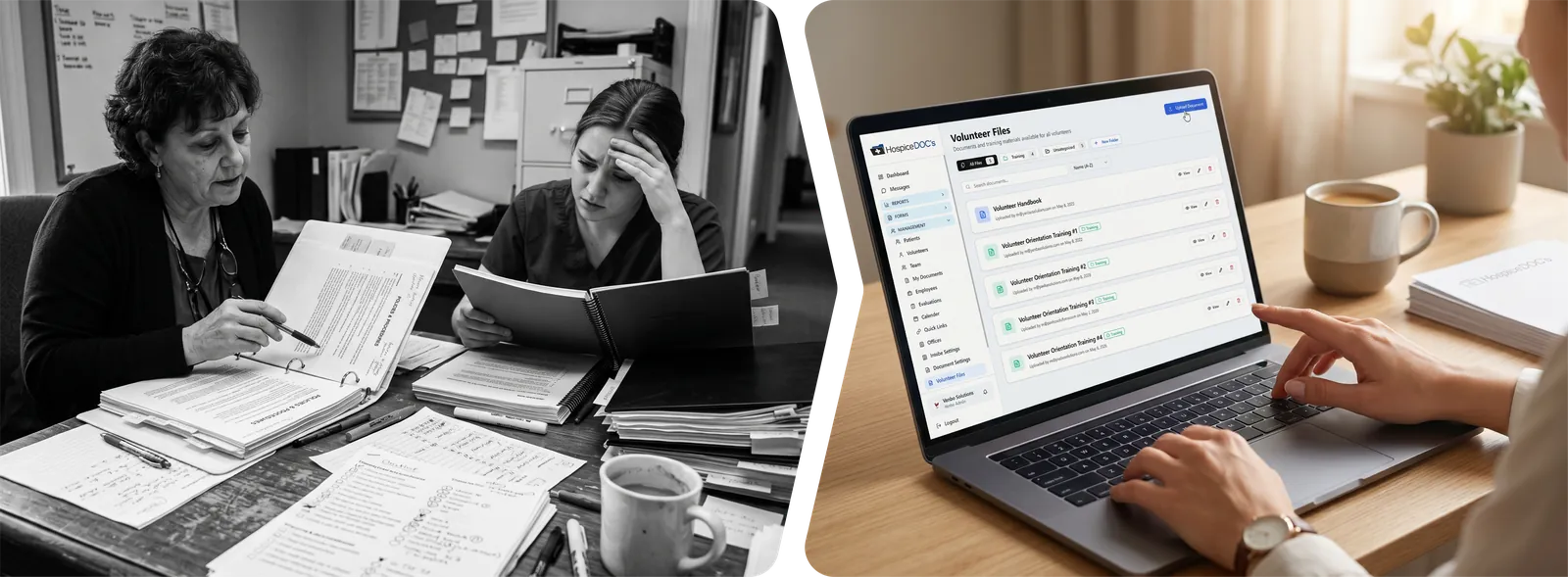
The difficulty of fragmented volunteer management is more than an inconvenience.
It can affect how quickly coordinators respond to volunteers, how confidently they retrieve information, and how clearly administrators understand what is happening within the program.
Consider three common situations.
A volunteer is ready to begin serving, but documentation is incomplete. Without a clear view of onboarding progress, identifying the missing requirement may involve reviewing files, emails, and other records.
An appointment changes, but the updated information is not reflected everywhere. Coordinators may need to contact multiple people and reconcile records to confirm the current schedule.
An administrator requests volunteer activity data. If hours, visit records, and other program information are managed separately, preparing the report may require gathering and consolidating information manually.
None of these problems means the volunteer program is poorly managed. They illustrate how administrative systems can make otherwise routine work more demanding.


Why This Matters as Hospice Programs Grow
The National Alliance for Care at Home reported that 1.91 million Medicare beneficiaries received at least one day of hospice care in 2024, an increase of 4.4% from the previous year.
This growth does not mean every individual hospice is expanding. However, it demonstrates the scale of hospice services nationally and the importance of sustainable operational practices.
For volunteer programs, growth can mean managing more volunteer records, patient assignments, training requirements, and activities.
Multi-location organizations may face additional challenges, including maintaining consistent processes while allowing individual offices to manage their own volunteers and services.
Systems that were manageable for a small program may become increasingly difficult to maintain as the volume of activity increases.
Giving Volunteer Coordinators Better Visibility
Improving volunteer program management does not necessarily require adding more procedures. In many cases, the opportunity is to make existing responsibilities easier to manage.
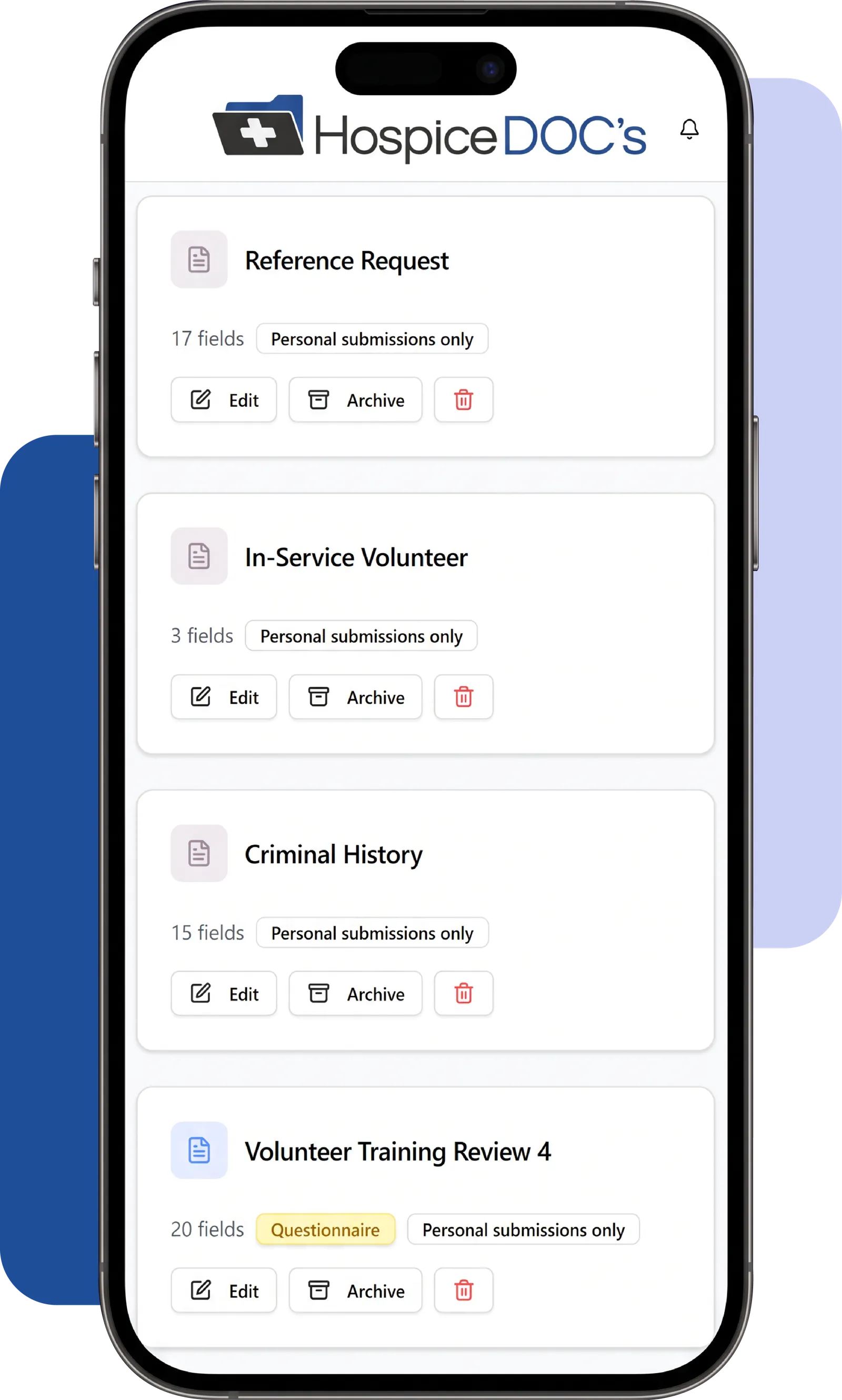
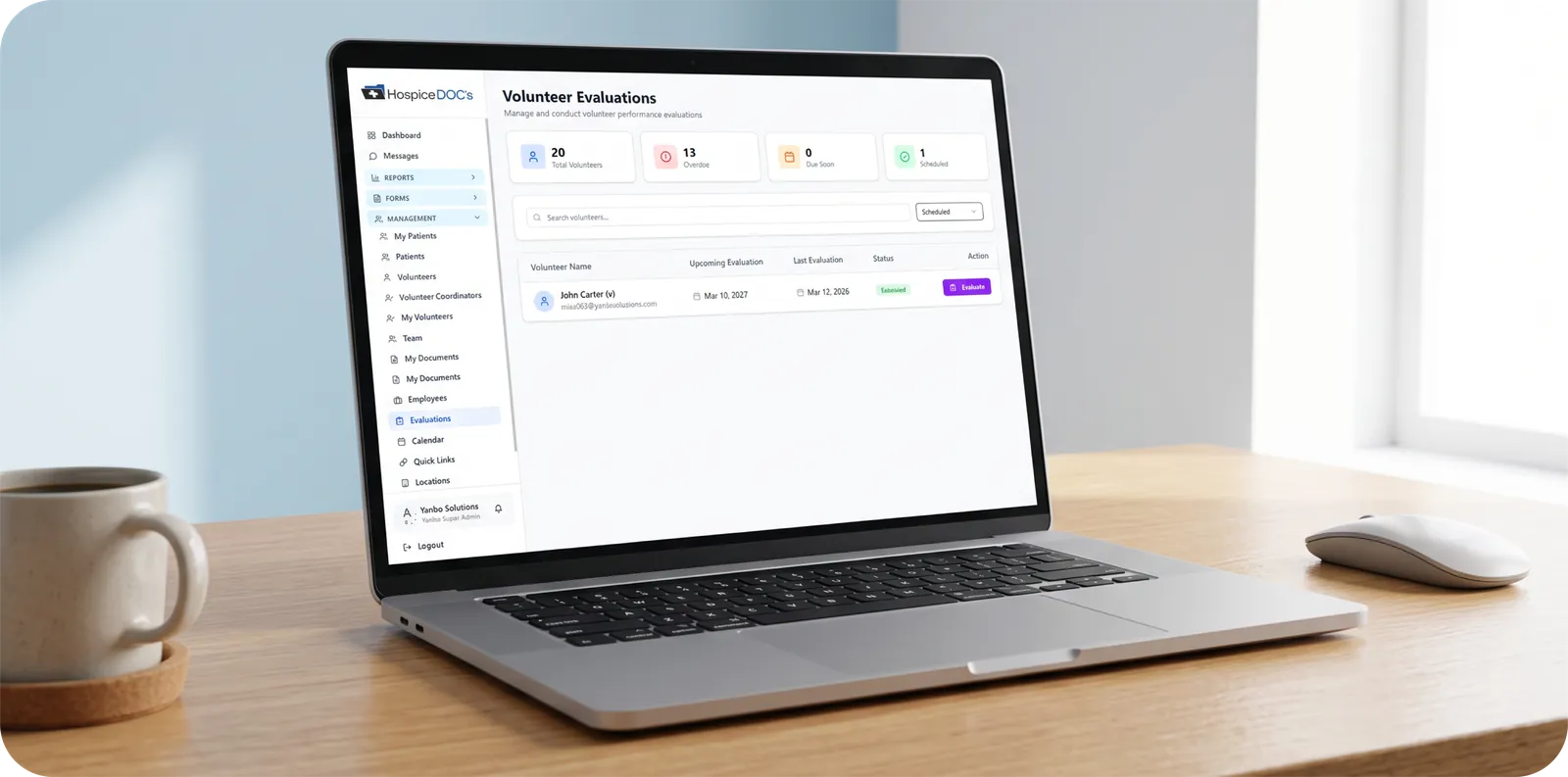
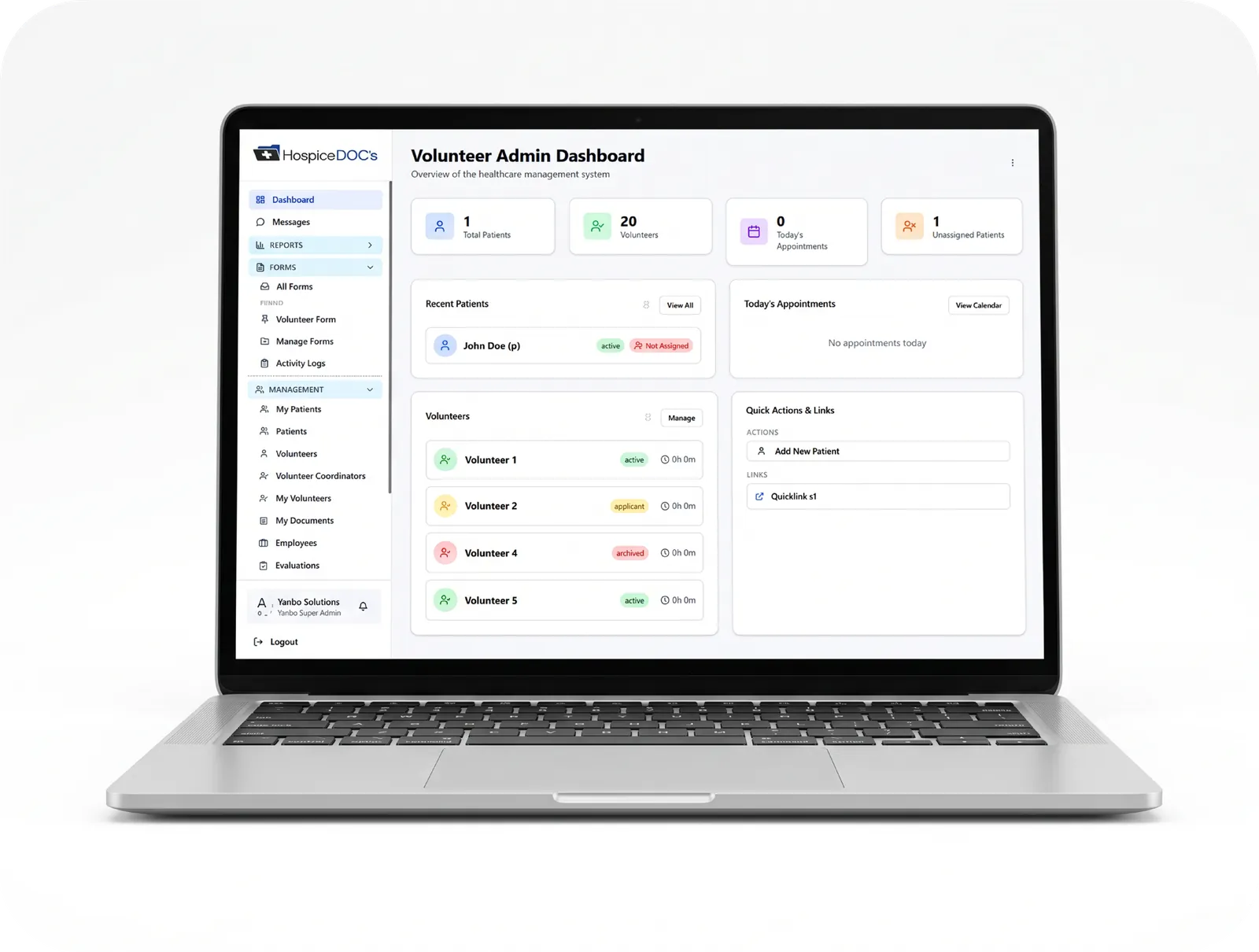
A centralized volunteer management system can help coordinators see applicant progress, track required records, manage appointments, document volunteer activities, and access reporting information without constantly moving between unrelated tools.
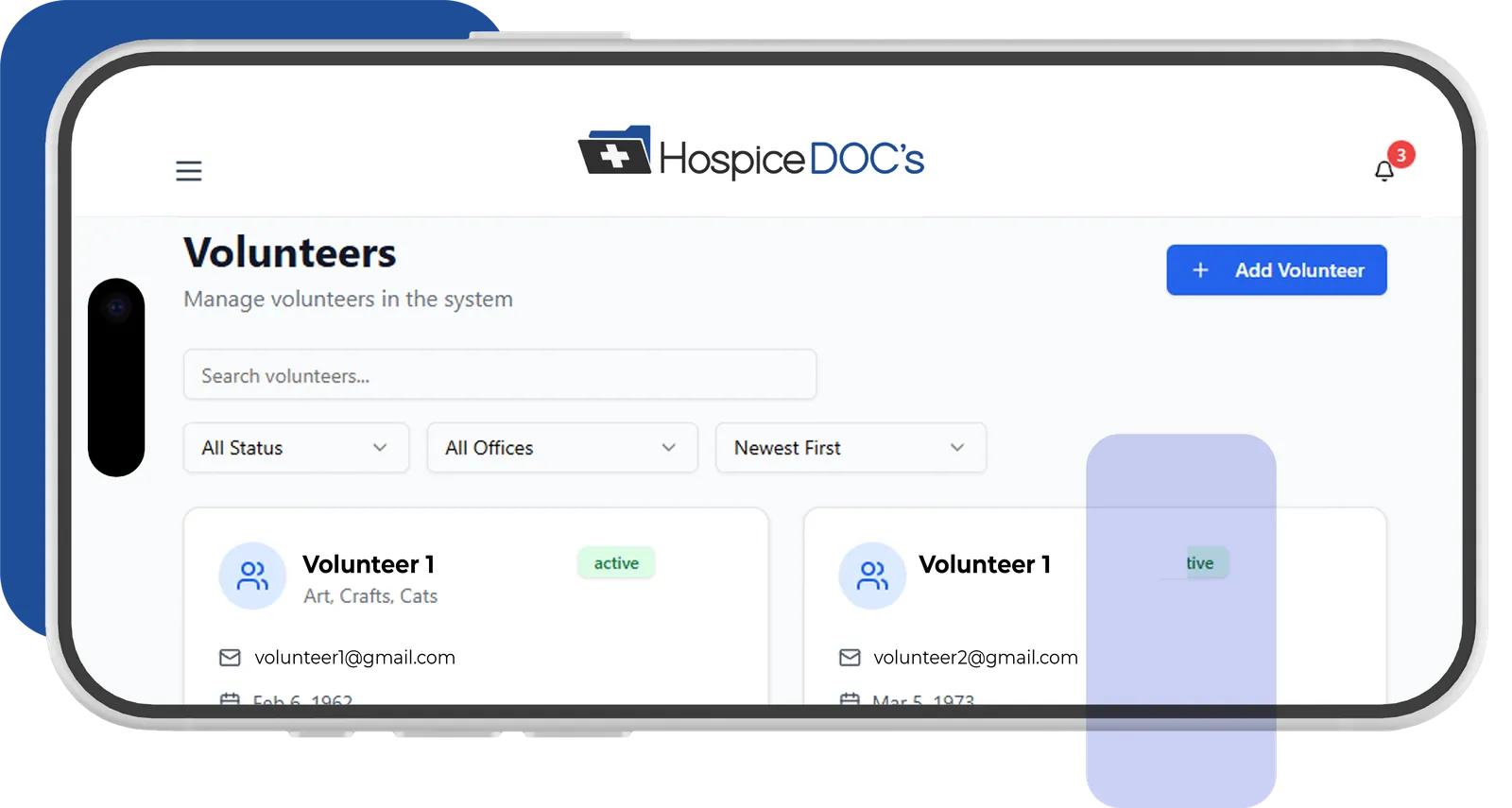
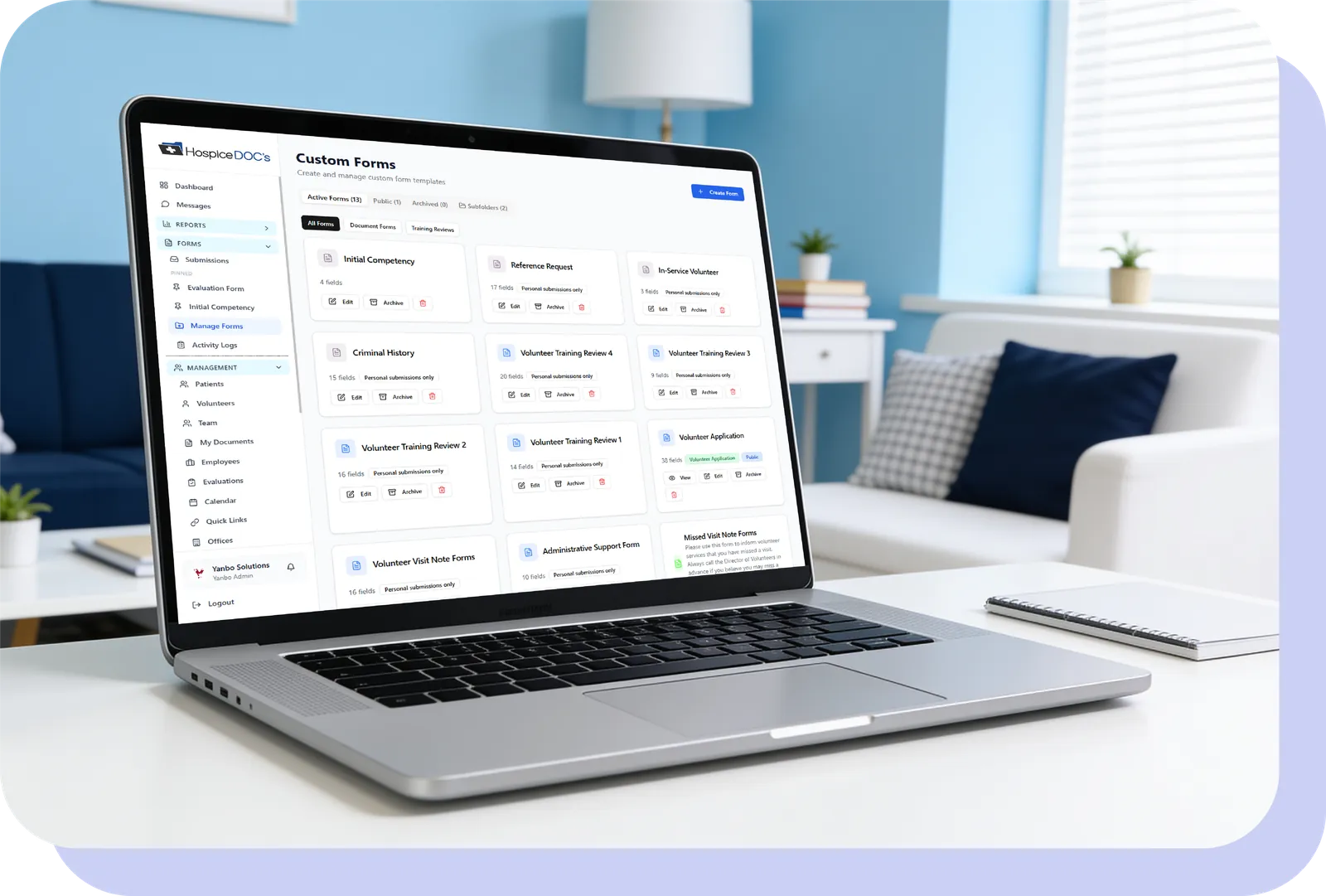
Better visibility can also help identify issues before they become larger administrative problems. For example, coordinators can more easily determine which volunteers have incomplete records, which training items need attention, and where additional follow-up may be necessary.
The goal is not to eliminate the human involvement that makes hospice volunteering meaningful. It is to reduce the administrative effort required to support that involvement.
More Time for the People Behind the Program
Volunteer coordinators are responsible for much more than keeping records organized. They recruit, encourage, guide, and support people who choose to give their time to patients and families. They help connect volunteers with meaningful opportunities and maintain the relationships that keep programs functioning.
Administrative responsibilities will always be part of that work.
But the systems used to manage those responsibilities can make a significant difference. When information is easier to find, schedules are easier to manage, and reports require less manual preparation, coordinators are better positioned to focus on volunteers and the services they provide. Hospice volunteer work deserves better systems behind it.

How Hospice Docs Can Help
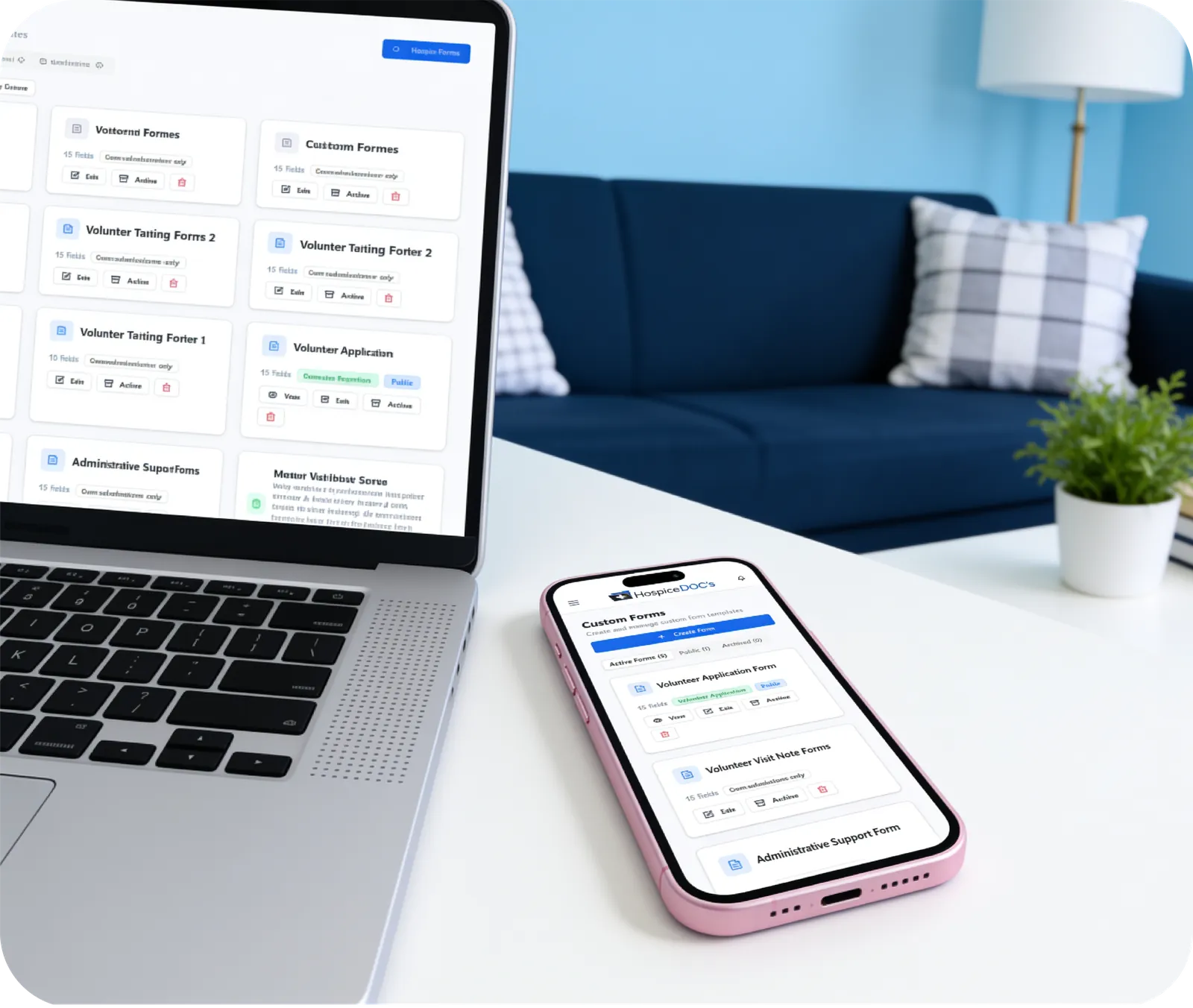
Hospice Docs was developed specifically to make hospice volunteer management easier – from onboarding and documentation to scheduling, volunteer activity tracking, and reporting.
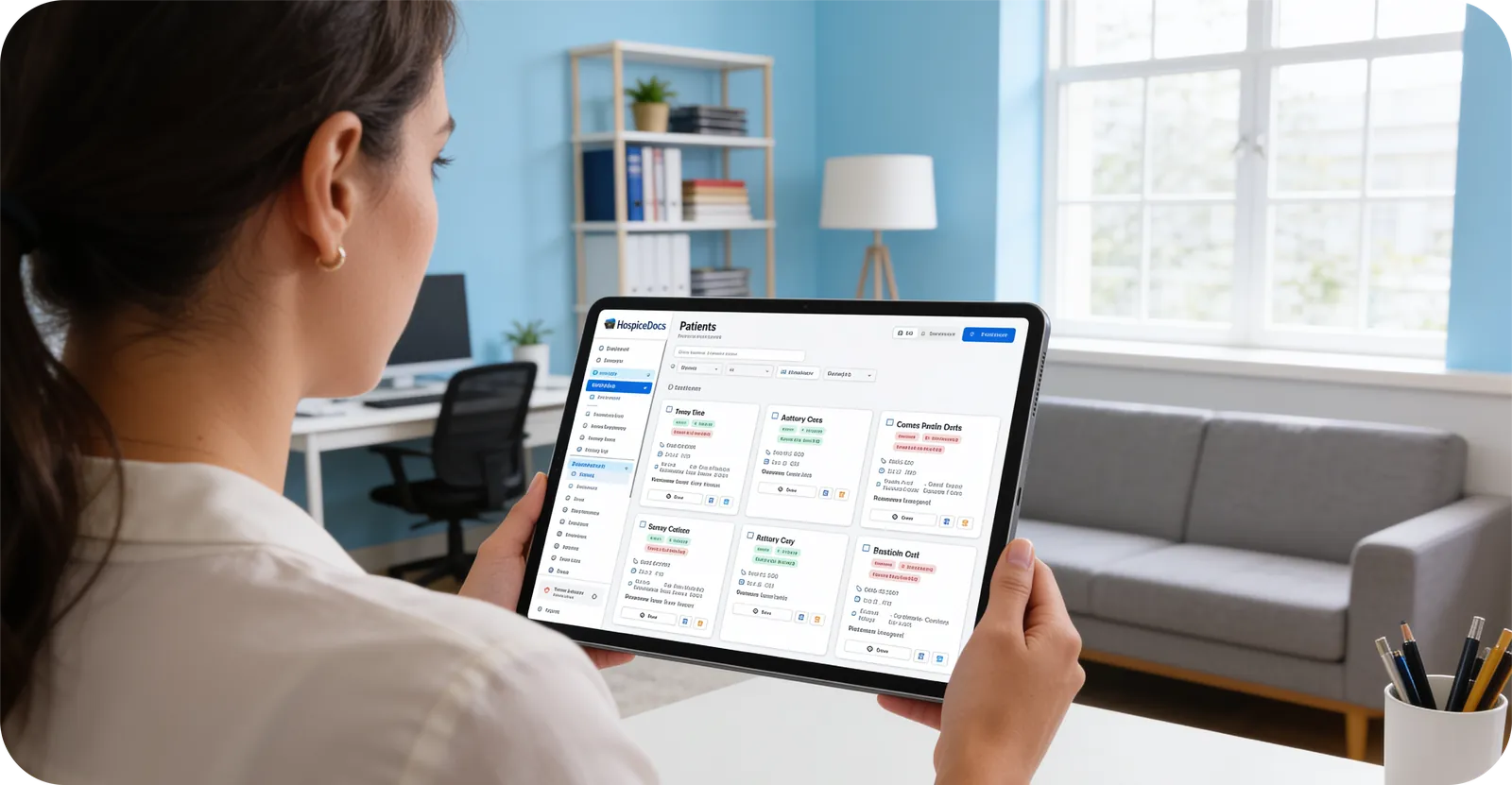
The platform brings essential program information together so coordinators can manage day-to-day responsibilities and administrators can maintain greater visibility into their volunteer programs.
See How We Simplify Hospice Volunteer Management
The easiest way to understand Hospice Docs is to see it in action.
What to Expect?
- A clear, step-by-step walkthrough
- Real examples based on hospice volunteer workflows
- Answers to your questions
- No pressure or commitment
No technical experience needed.
We’ll guide you through everything.

Ready to Simplify Hospice Volunteer Management?
See how Hospice Docs can help your team reduce administrative work, stay organized, and manage your volunteer program more efficiently.
Request a Demo