Spreadsheets Have Their Limits.
Your Volunteer Program Doesn’t.
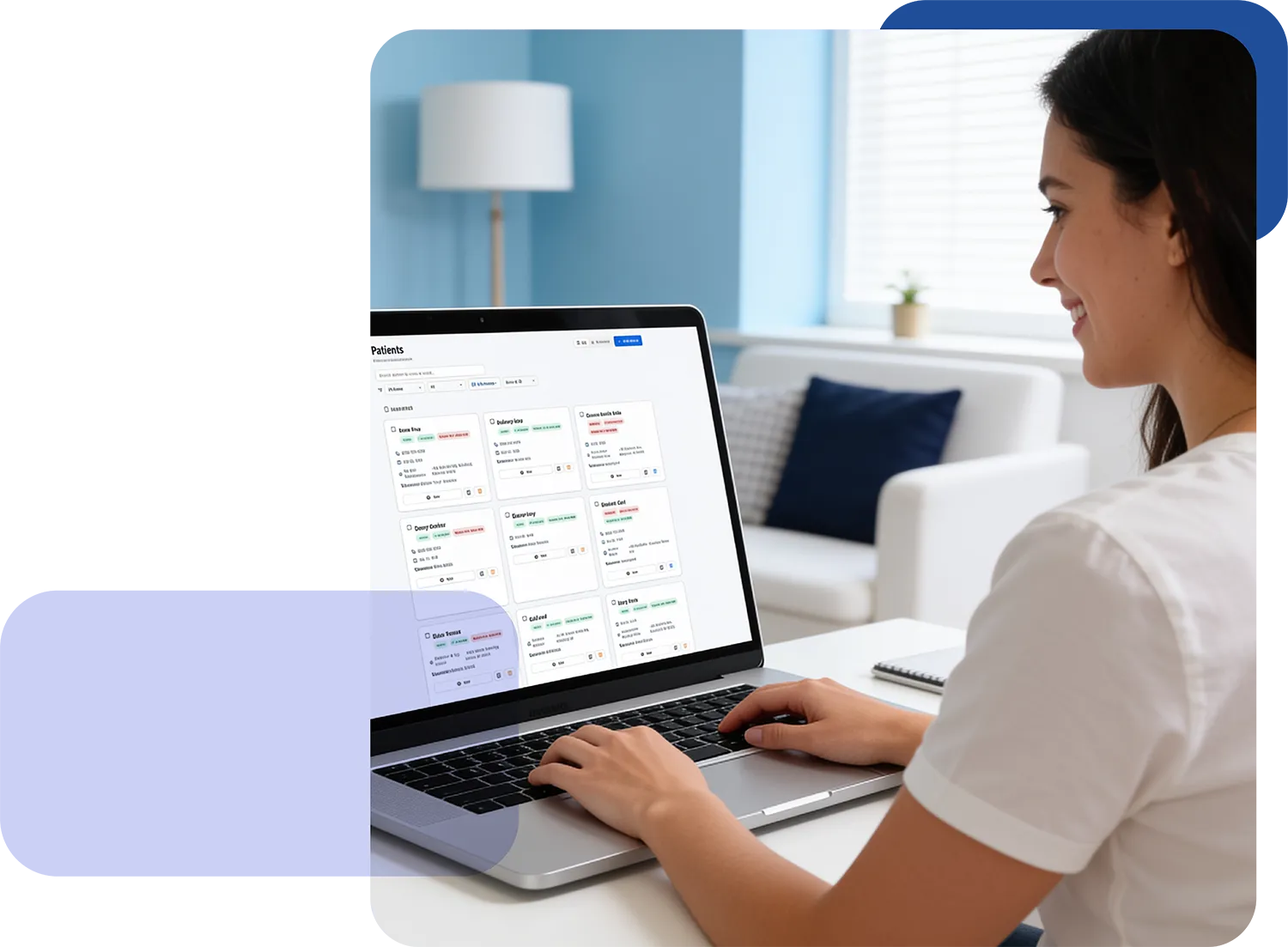
Spreadsheets are familiar, affordable, and flexible. For many hospice volunteer coordinators, they are one of the first tools used to organize volunteer information, track hours, maintain contact lists, and monitor program activities.
And for a small volunteer program, they may work perfectly well. But as a hospice volunteer program grows, so does the information that needs to be maintained. Applications, onboarding requirements, training records, volunteer availability, patient assignments, visit documentation, activity hours, evaluations, and reporting all become part of the coordinator’s responsibilities.
What begins as a practical way to organize information can gradually become a system that requires more time and attention to maintain. The problem is not necessarily the spreadsheet itself. It is trying to manage an entire volunteer program through tools that were primarily designed to organize data.
And the consequences go beyond administrative efficiency. Every additional hour spent maintaining disconnected records is time that could otherwise be dedicated to recruiting new volunteers, supporting existing ones, and building the relationships that keep hospice volunteer programs strong.


A spreadsheet can be an effective way to maintain a list of volunteers, record contact information, or track a limited set of activities.
For a program with a small number of volunteers and relatively simple processes, that may be enough.
However, hospice volunteer management involves responsibilities that extend beyond maintaining information.
Coordinators must follow applicants through onboarding, confirm training completion, monitor documentation requirements, schedule volunteers, manage changes, track completed activities, and prepare reports.
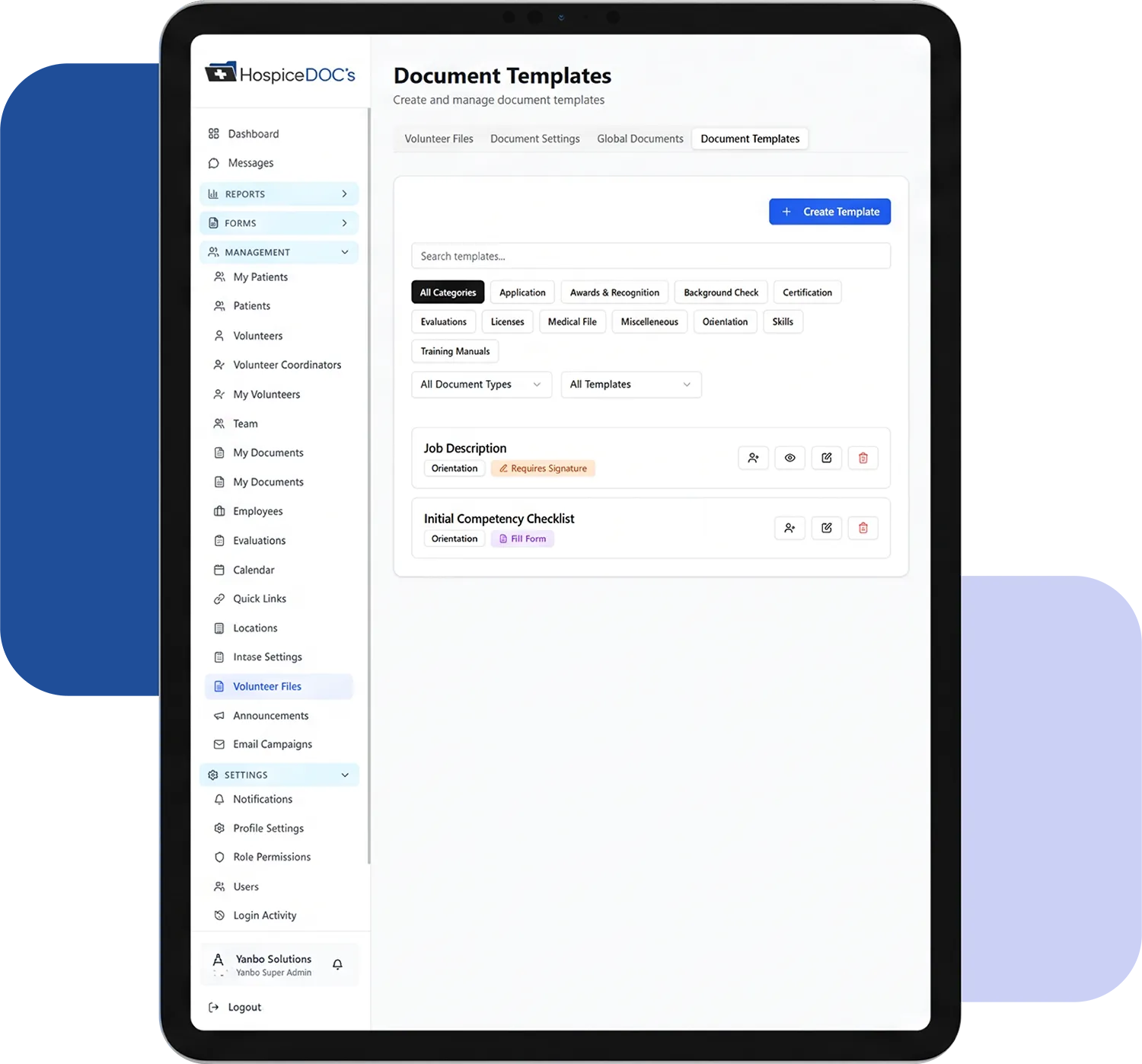

Each responsibility introduces information that must remain accurate and connected to other parts of the program.
A spreadsheet may show that a volunteer has completed orientation, but the associated training documentation may be stored in a separate folder. Another spreadsheet may track volunteer hours, while appointments and visit notes are maintained elsewhere.
As the number of volunteers and activities increases, coordinators need to devote more time to keeping these records connected and up to date. The system still works, but keeping it current becomes a responsibility of its own.
Consider the information associated with a single hospice volunteer.
The individual begins as an applicant, completes orientation and training, submits required documents, becomes available for assignments, participates in scheduled activities, and records service hours.
Throughout that process, the coordinator must maintain a consistent view of the volunteer’s status and activity.
When information is managed across spreadsheets, paper records, emails, and shared folders, the same volunteer may appear in several places.
Contact information may be maintained in one file. Training completion dates may be tracked in another. Availability could be stored in a calendar, while completed visits and volunteer hours are documented separately.
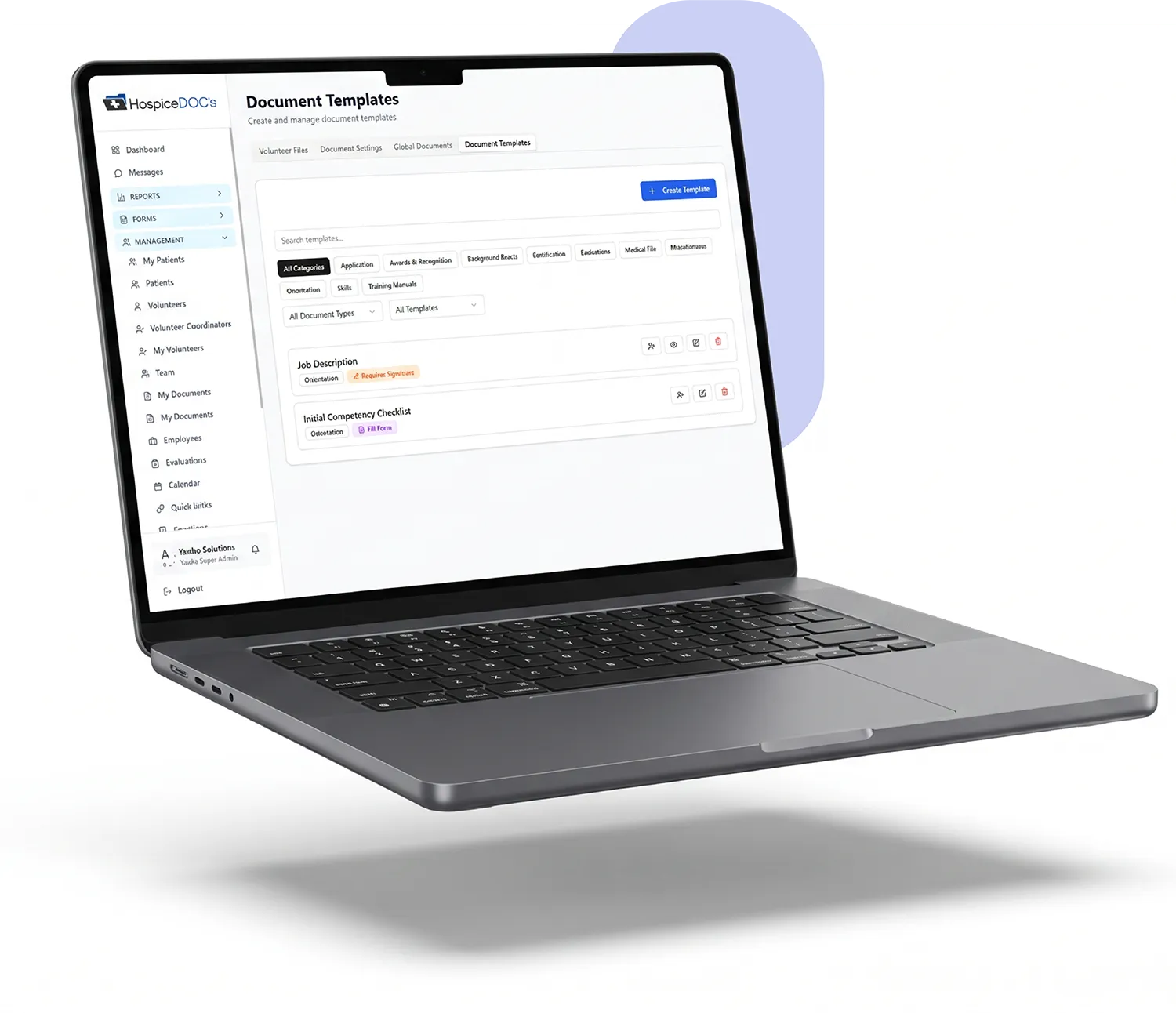

This creates an ongoing need to verify that information across those records remains consistent. For example, when a volunteer changes their availability, will that update be reflected everywhere the coordinator needs it?
When training is completed, can the coordinator immediately see that the volunteer is ready for the next step? When an administrator requests activity information, can it be retrieved without comparing multiple files?
These questions become increasingly important as programs manage more volunteers and responsibilities. An organized volunteer program needs more than accurate individual records. It needs those records to work together.
Maintaining spreadsheets often involves small administrative tasks that are easy to overlook. Someone must enter new information, update existing records, verify completed activities, check for missing documentation, and make sure everyone is working with the most current information.
A volunteer submits an updated training certificate. The coordinator saves the document and updates the tracking spreadsheet. An appointment is canceled. The calendar must be changed, and the coordinator may need to adjust another record used for assignment tracking.
A volunteer submits their hours. The information must be reviewed and entered into the appropriate reporting file. Individually, these tasks may take only a few minutes. But across dozens of volunteers, multiple activities, and ongoing program requirements, those minutes begin to add up.
There is also the challenge of maintaining consistency when more than one person updates program information. Different file versions, duplicate records, missing entries, or outdated information can create confusion and additional follow-up.
The result is not always a major error. More often, it is a steady accumulation of administrative work required to keep the information reliable. The value of a connected volunteer management system is not simply storing that same information somewhere else. It is allowing information entered through onboarding, scheduling, volunteer activities, and documentation to remain connected and available for the next task.
That can reduce the need to repeatedly search for, transfer, compare, and reconcile information across different files.

Volunteer hour tracking is one area where disconnected records can create additional challenges for hospice organizations.
Under 42 CFR §418.78(e), Medicare-certified hospices must maintain records of volunteer services, including the type of service performed and time worked.
The regulation also establishes the requirement that qualifying volunteer administrative and direct patient-care services equal at least 5% of the total patient-care hours provided by paid hospice employees and contract staff.
For coordinators, this means accurate volunteer-hour tracking is more than a matter of keeping activity totals. The organization needs reliable information about the services volunteers provide and the time associated with those activities.
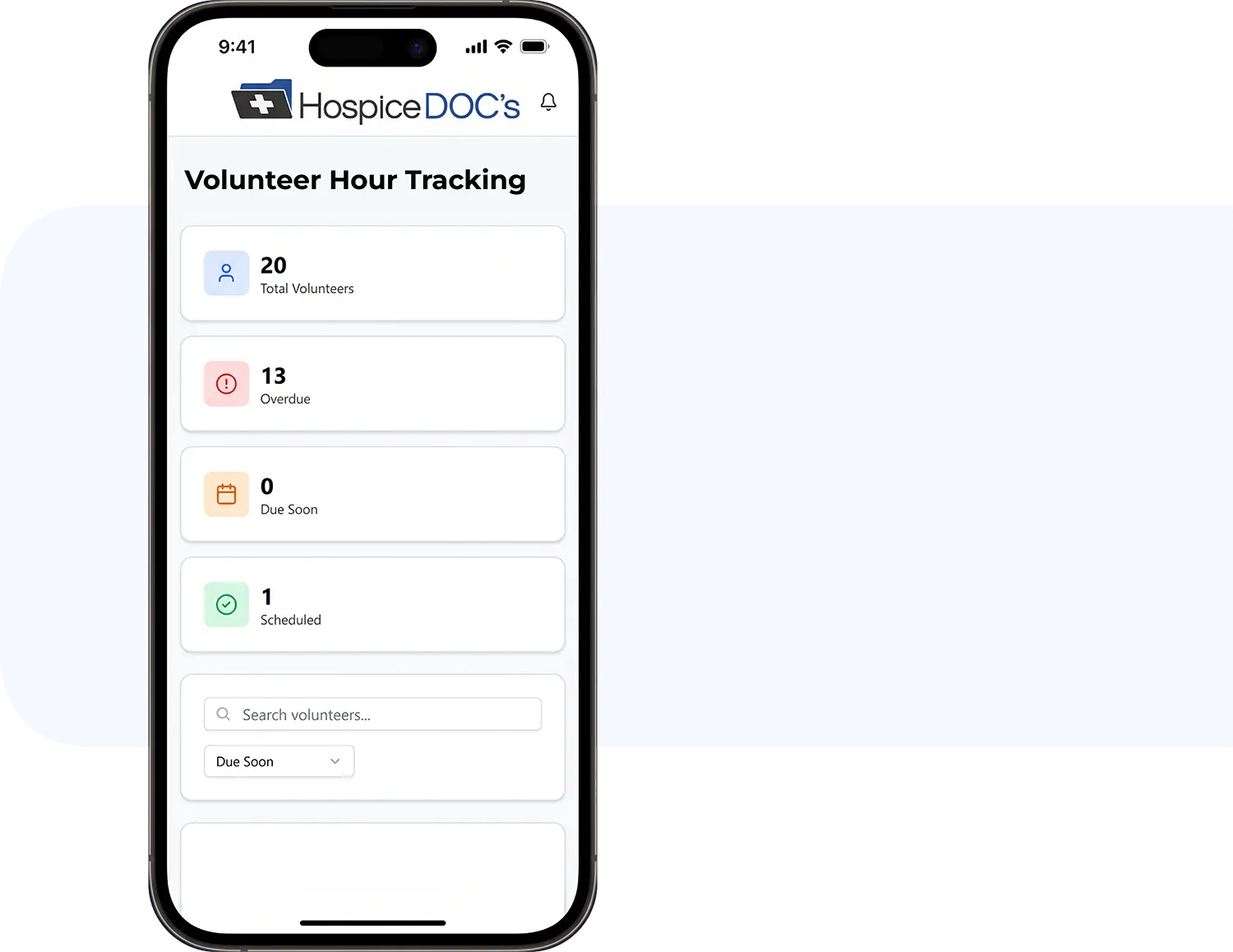

Consider a program where volunteer hours are collected through paper timesheets, emails, and spreadsheets. Some volunteers may submit their hours promptly. Others may forget or submit incomplete information. Different records may use inconsistent descriptions of activities, requiring additional clarification.
When an administrator requests a report, the coordinator may need to identify missing submissions, verify recorded time, consolidate information, and organize the results. Spreadsheets can calculate volunteer hours and help determine whether a hospice meets the Medicare 5% volunteer service requirement. However, the accuracy of that calculation depends on having complete records of qualifying volunteer hours and the corresponding paid patient-care hours.
When volunteer information is collected across paper timesheets, emails, and separate spreadsheets, ensuring that those records are accurate and complete can become a time-consuming process. In a centralized system such as Hospice Docs, volunteer time and activity information is maintained within the platform. Coordinators can review submissions and use reporting tools to retrieve the information they need, reducing the need to collect and combine records from multiple sources.
The advantage is not simply recording hours digitally. It is making those records easier to review, maintain, and use for reporting without repeatedly gathering information from disconnected sources.
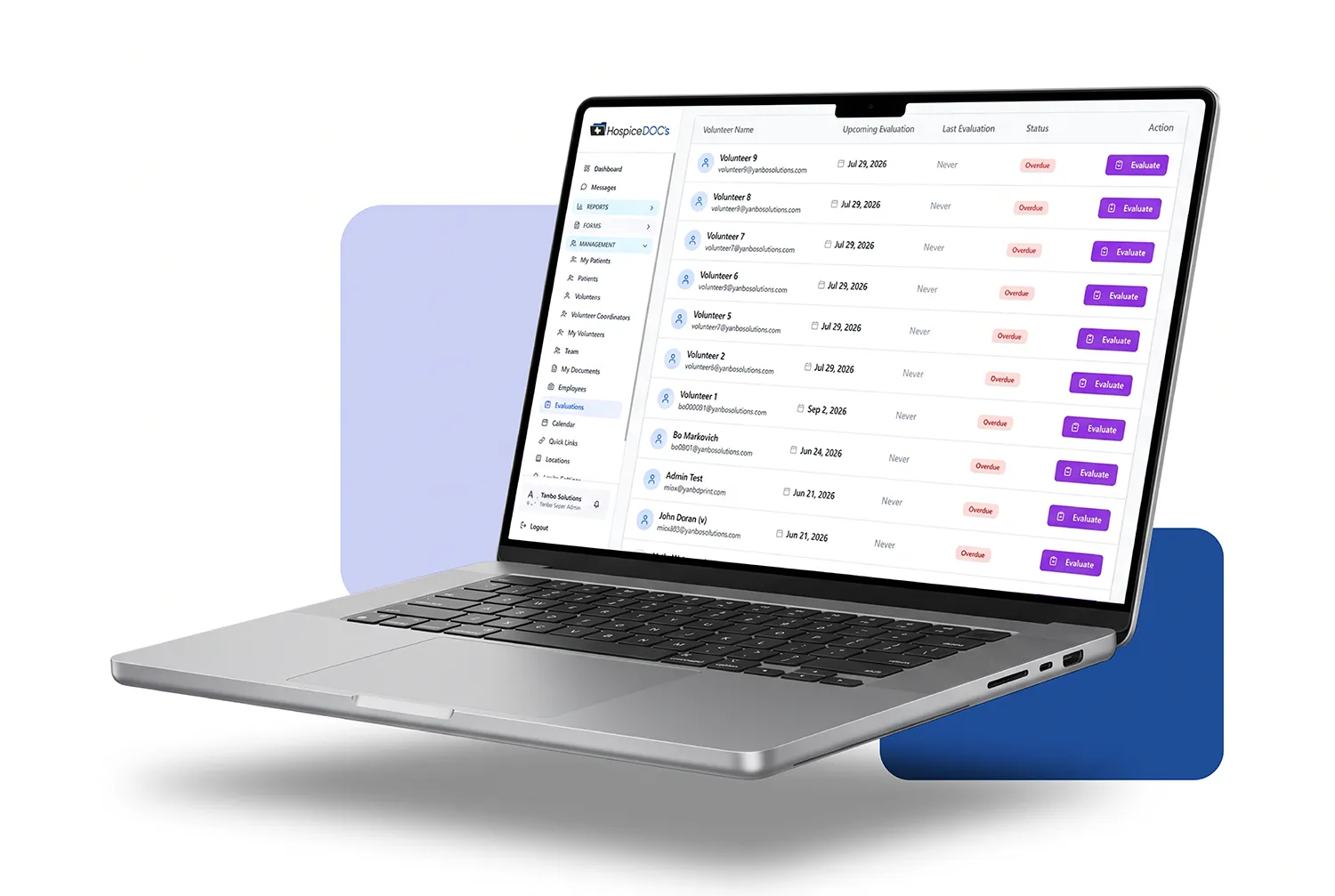
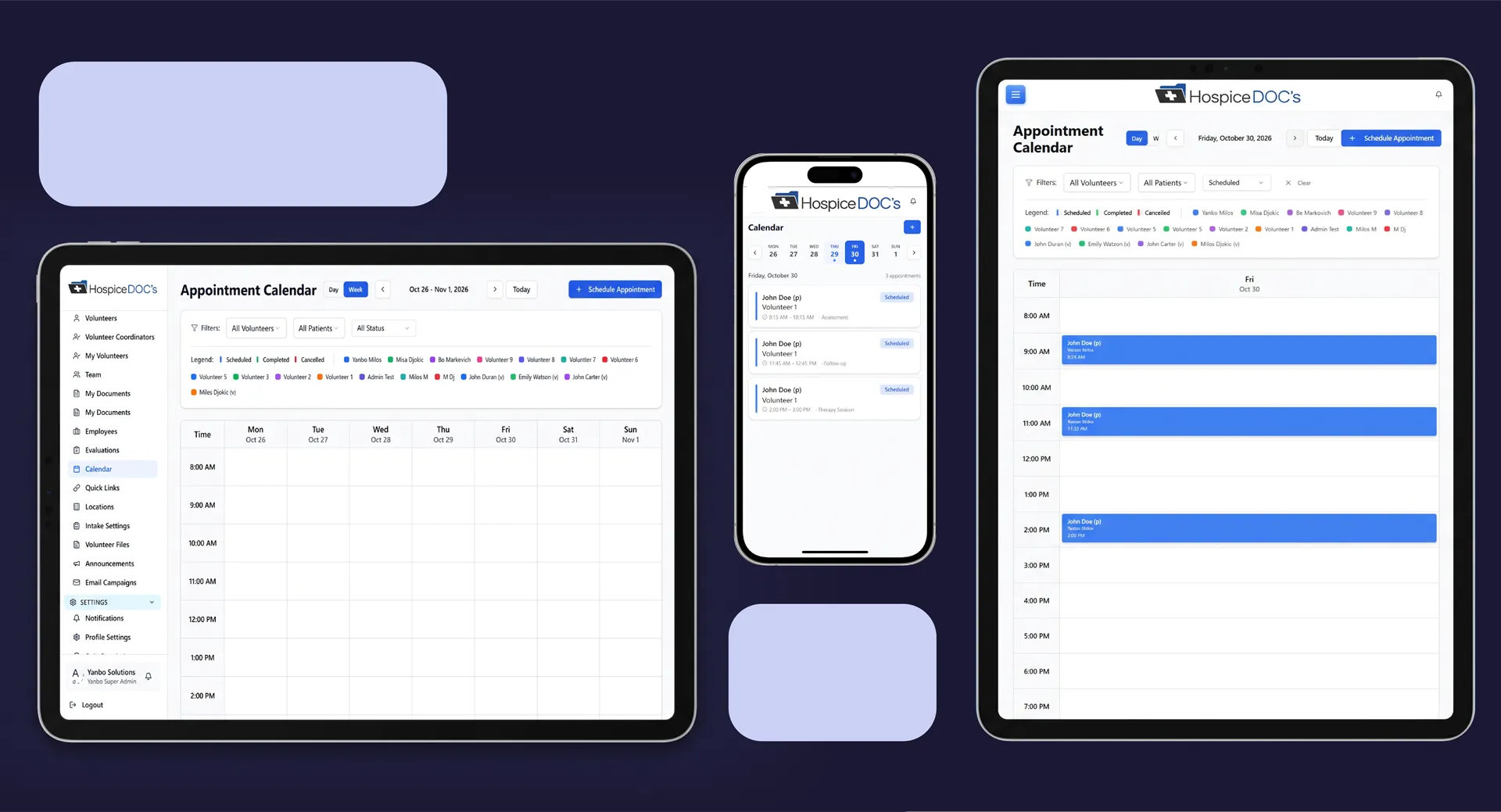
Volunteer scheduling is another area where spreadsheets may become difficult to maintain. Coordinators need to consider volunteer availability, patient needs, upcoming appointments, cancellations, and changes to assignments.
A spreadsheet can provide a useful overview of scheduled activities. However, it may not provide an integrated way for volunteers and coordinators to manage scheduling changes and related documentation. Consider what happens when a volunteer cannot complete a scheduled visit.
The coordinator may need to update the schedule, identify another available volunteer, communicate the change, confirm the new assignment, and make sure the appropriate information is reflected in program records. If these activities occur across separate systems, even a straightforward schedule change can involve multiple steps.
As volunteer activity increases, keeping everyone informed and working from the same schedule becomes increasingly important. A more connected scheduling process can help reduce the need to reconcile information across calendars, spreadsheets, emails, and activity records.
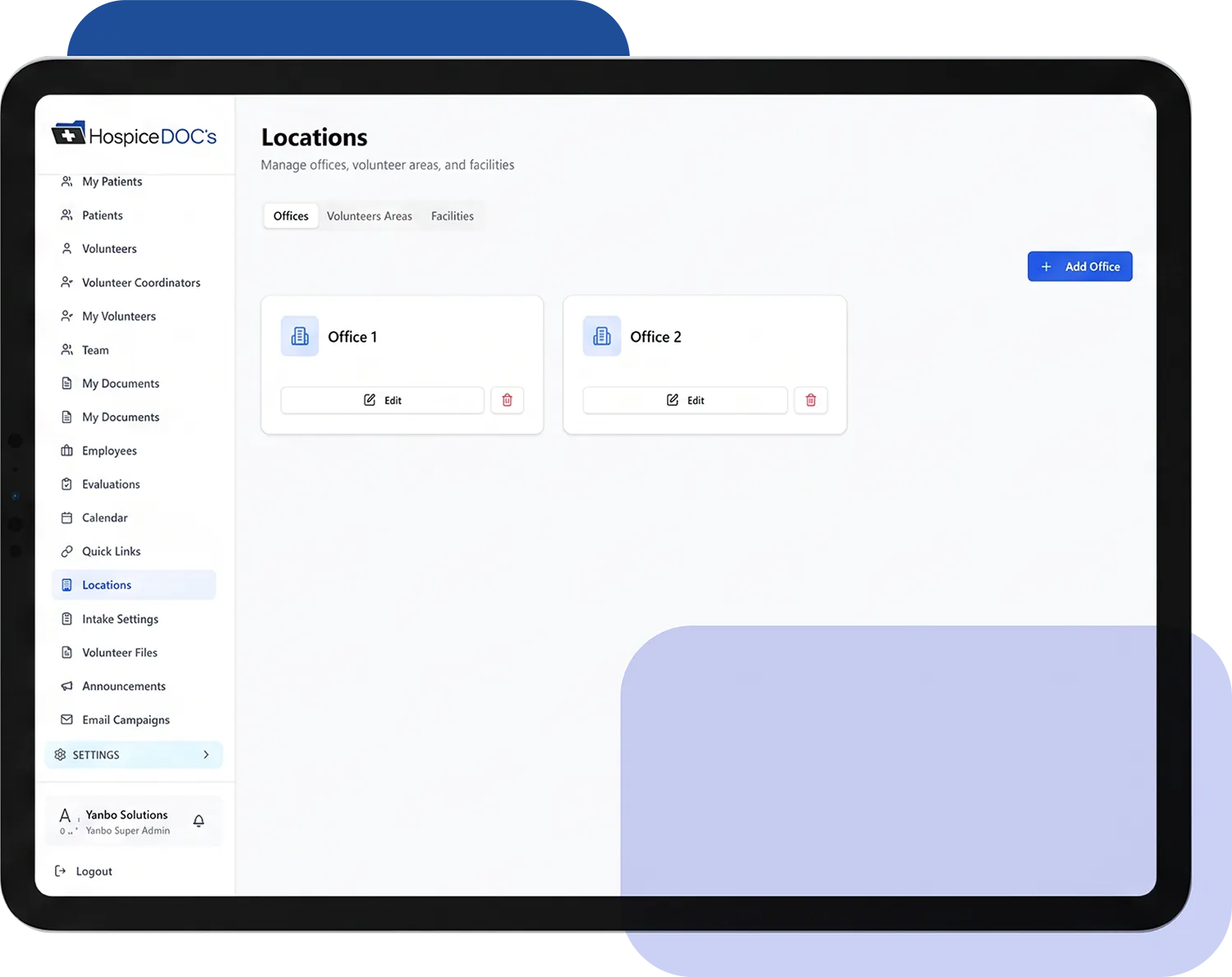
The limitations of spreadsheet-based volunteer management may become more noticeable when hospice organizations operate across multiple offices or service areas.
Each location may maintain its own volunteer records, schedules, training information, and activity reports. While this can give local coordinators flexibility, it may also create inconsistencies in how information is recorded and maintained.
Administrators overseeing several locations may need to combine reports, compare activity, review documentation, or determine whether organizational requirements are being managed consistently. If each office uses a different spreadsheet structure or reporting method, obtaining a clear picture of the overall volunteer program can become time-consuming.
The challenge extends beyond combining data.
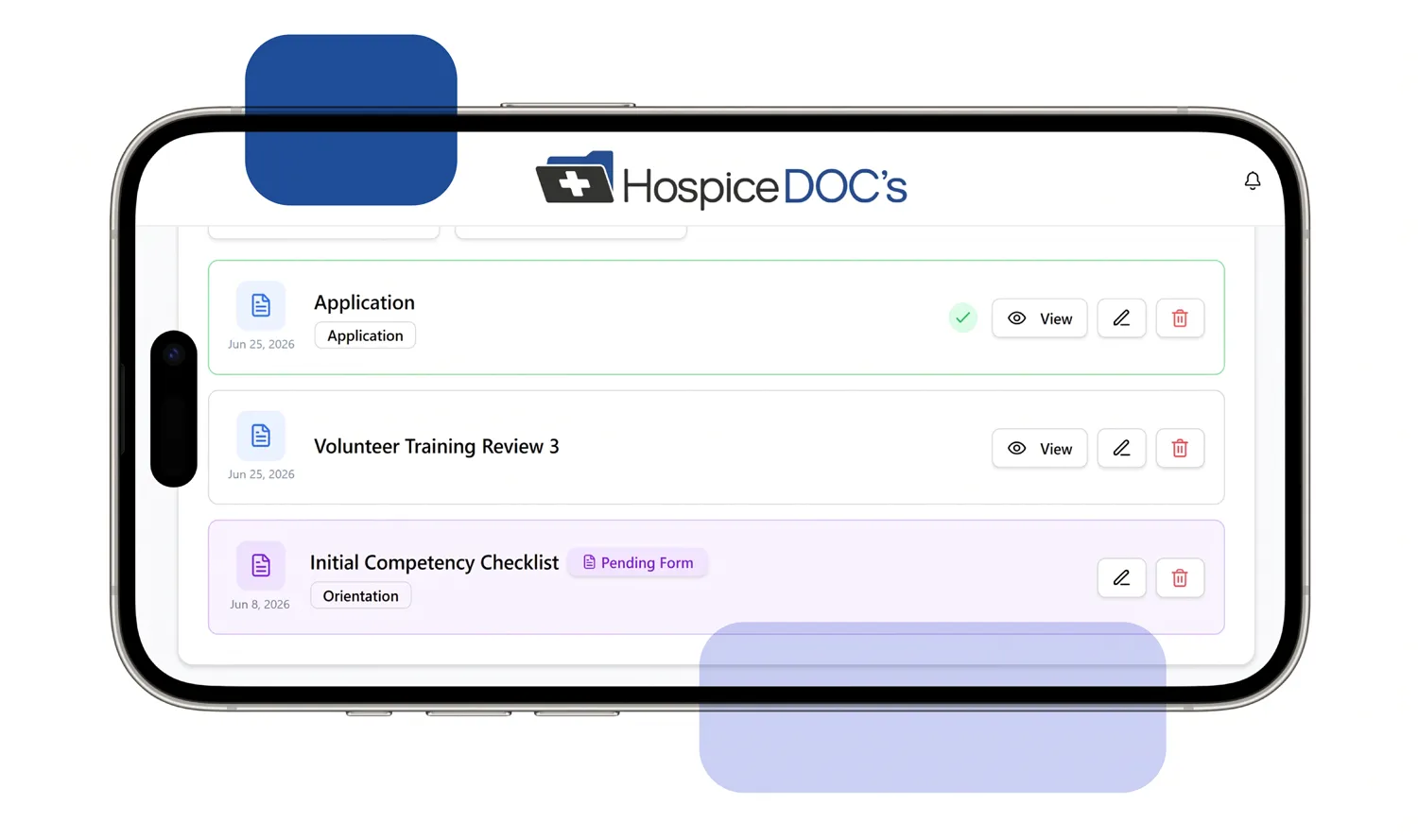

Organizations may also need to manage which coordinators can access or update particular records, maintain consistent onboarding requirements, and provide leadership with visibility across locations.
Spreadsheets and shared drives can be configured with access controls and standardized processes, but maintaining those arrangements often requires additional oversight.
A volunteer management system designed for multiple locations can bring local coordination and organizational reporting into a more consistent environment.
Spreadsheets are often considered a low-cost solution because they are inexpensive or already included in an organization’s existing software. But the price of the spreadsheet is only part of the equation. When you account for the staff hours spent entering information, updating records, correcting inconsistencies, tracking missing documentation, and preparing reports, that inexpensive solution can become surprisingly costly.
Consider how much time coordinators may spend maintaining multiple spreadsheets each week. Even a few additional hours of administrative work can add up to a significant labor expense over the course of a year. The financial question is not simply what an organization pays for its spreadsheets. It is how much staff time is required to maintain the entire process.


Consider a hospice organization with 75 active volunteers preparing for a quarterly review of training requirements, documentation, expiration dates, and outstanding records. In a spreadsheet-based process, the coordinator may need to review individual entries, locate supporting documents in separate folders, compare completion dates, identify missing information, and prepare a list of volunteers requiring follow-up.
With a centralized platform such as Hospice Docs, volunteer records, training requirements, documents, and status information are maintained within the same application.
Coordinators can more easily identify outstanding requirements, review supporting records, and determine where attention is needed.
Consider an illustrative scenario involving 75 volunteers, where reviewing training records, documentation, expiration dates, and outstanding requirements takes approximately 15 hours using separate spreadsheets and shared files. With the same information properly organized in a dedicated volunteer management system, the review could potentially be completed in approximately four hours.

That is potentially 11 hours recovered from a single quarterly review – or 44 hours across four reviews in a year. At an illustrative fully loaded staff cost of $35 per hour, those 44 hours represent $1,540 in staff-time value annually from this one workflow.
These figures are hypothetical planning estimates, not measured Hospice Docs performance results. Actual time requirements depend on program size, record completeness, existing processes, and the software configuration. The estimates also exclude implementation and migration time. Tasks can overlap, and recovered staff time does not automatically translate into reduced payroll expense.

What the example illustrates is how the labor involved in maintaining information can become more expensive than the tools used to store it. And reviewing volunteer records is only one of the responsibilities coordinators manage. Onboarding, scheduling changes, document renewals, activity tracking, and reporting all create recurring administrative tasks. When unnecessary steps are repeated throughout the year, the cumulative demand on staff time can become substantial.
Volunteer coordinators have responsibilities that directly influence the strength of the program, including recruitment, onboarding, volunteer engagement, and retention.
When hours are consumed by repetitive data entry, reconciling records, and preparing reports, fewer hours remain for community outreach, building relationships with prospective volunteers, and supporting those already serving.
For Medicare-certified hospices, ongoing recruitment and retention efforts are also a regulatory responsibility under 42 CFR §418.78(c).
Reducing administrative work does not automatically increase recruitment or retention. But it creates an opportunity for coordinators to redirect time toward those important activities. The real cost of spreadsheets isn’t only what an organization pays to use them. It’s the time and resources required to keep the entire process working.

Moving away from spreadsheets does not necessarily mean replacing every existing process or introducing a complicated new system.
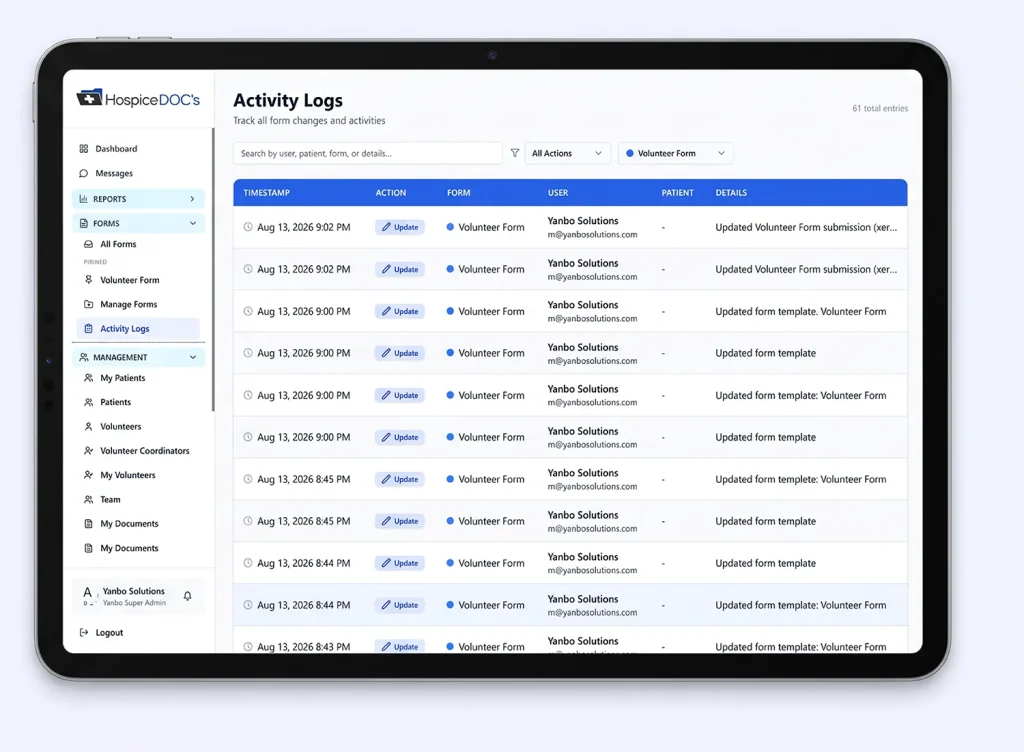
The objective should be to make the responsibilities coordinators already manage easier to complete. Rather than maintaining volunteer information in separate places, a dedicated management platform can connect onboarding, training, documentation, scheduling, activities, and reporting.
Coordinators can work from a more complete view of each volunteer, identify outstanding requirements, manage appointments, and review program activity without repeatedly gathering information from disconnected sources.
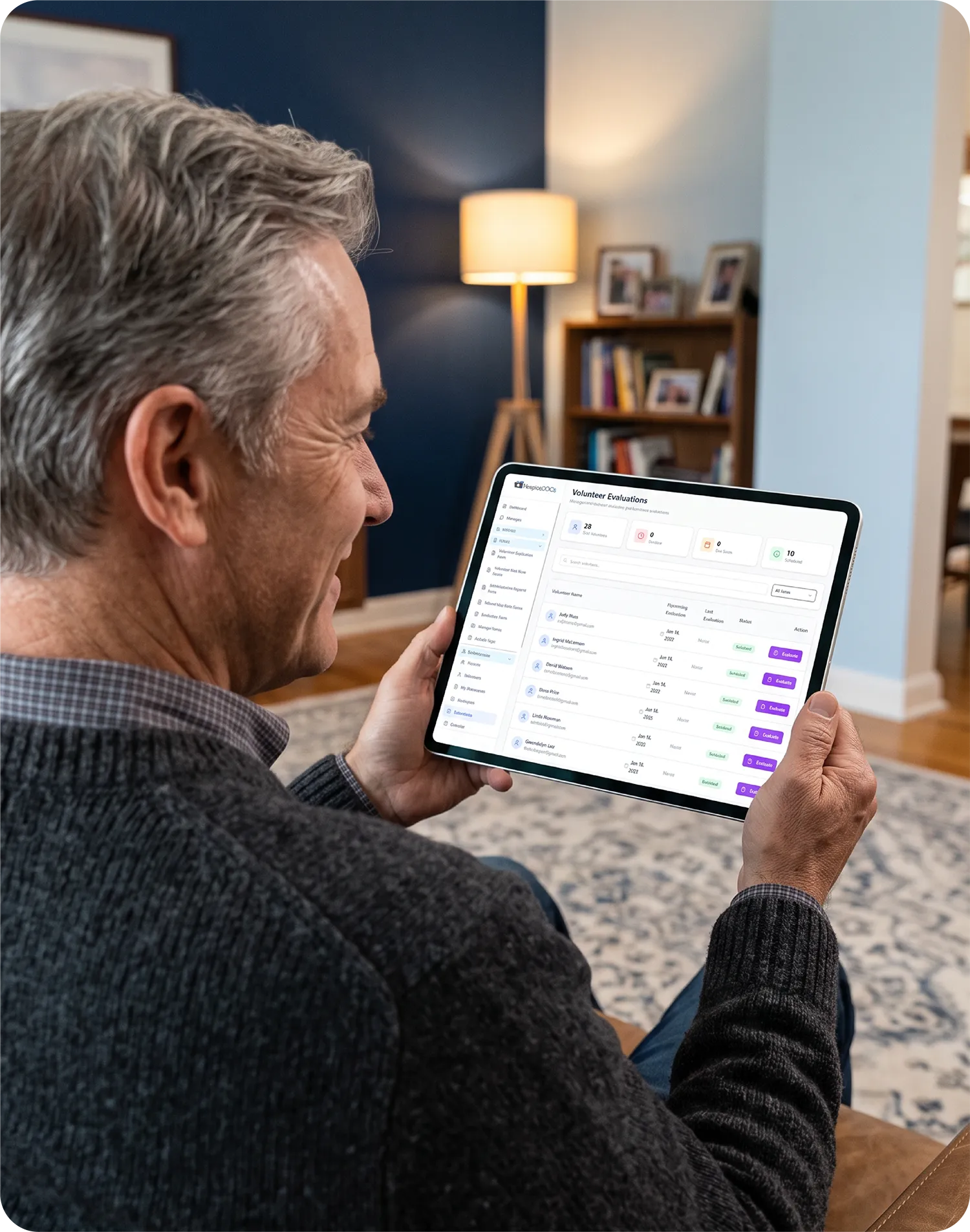
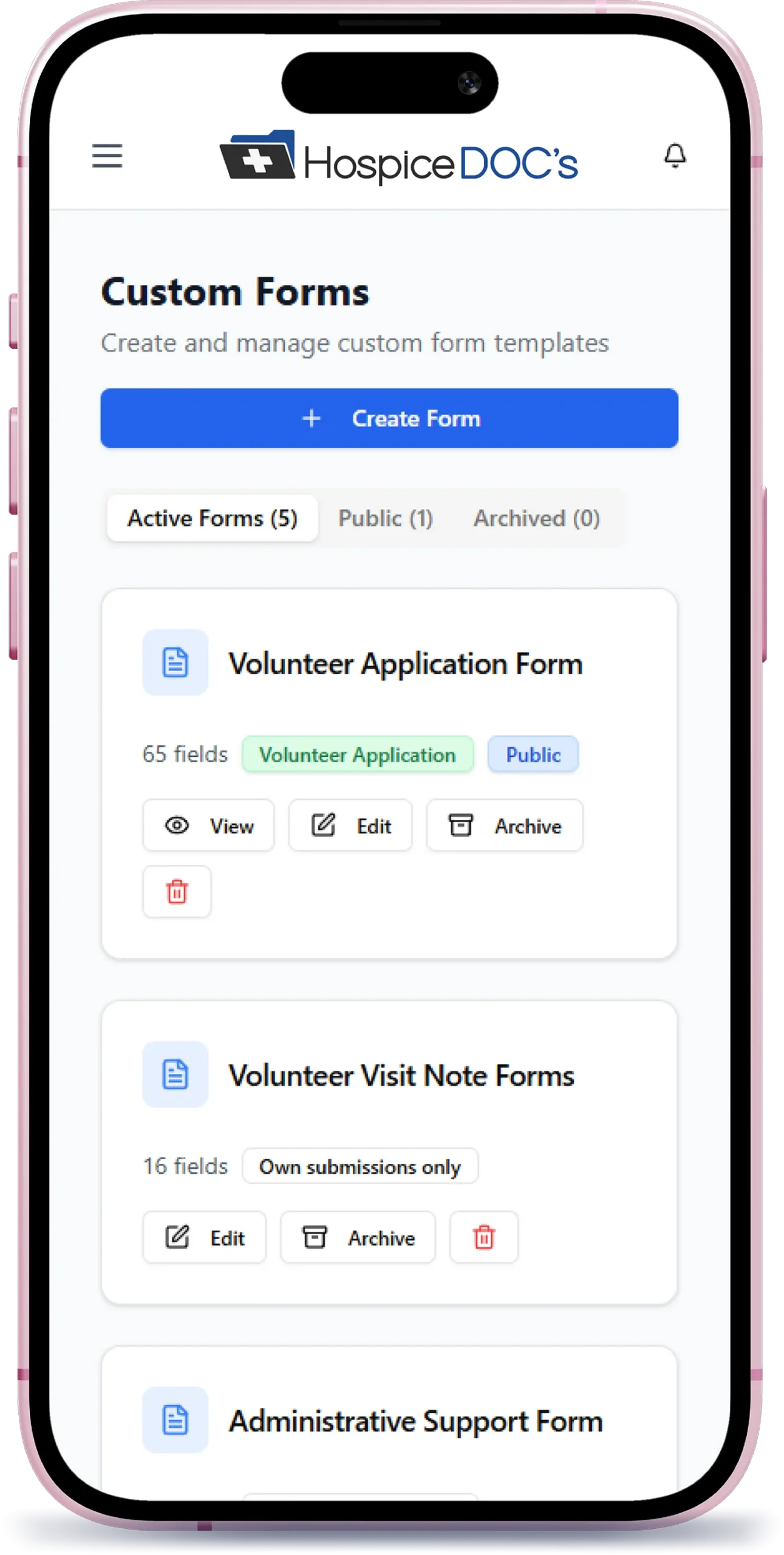
The value is not simply having information stored digitally. It is having the information organized around the way a hospice volunteer program actually operates.
When evaluating whether to move beyond spreadsheets, hospice organizations should consider the amount of manual work involved in current processes, how often information must be updated in multiple places, and how easily coordinators can retrieve what they need.
A system that reduces unnecessary steps can make daily coordination more manageable without adding complexity. More importantly, it can give volunteer coordinators greater freedom to focus on responsibilities that require personal attention – recruiting new volunteers, helping applicants become active, maintaining engagement, and supporting long-term participation.
Technology cannot replace those relationships. But it can reduce the administrative work competing for the time needed to build them.
Hospice Docs was developed specifically for the operational responsibilities involved in hospice volunteer management.
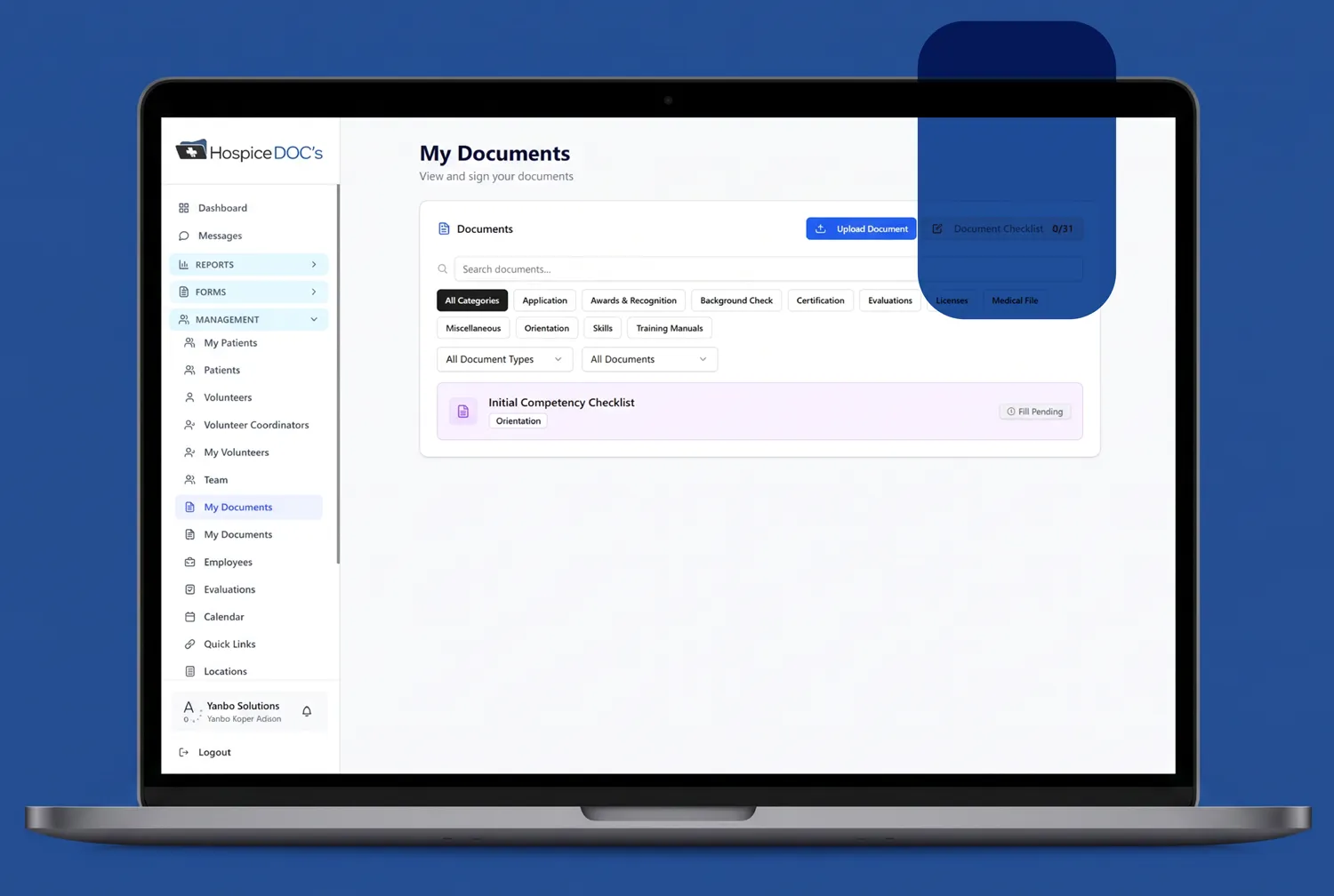
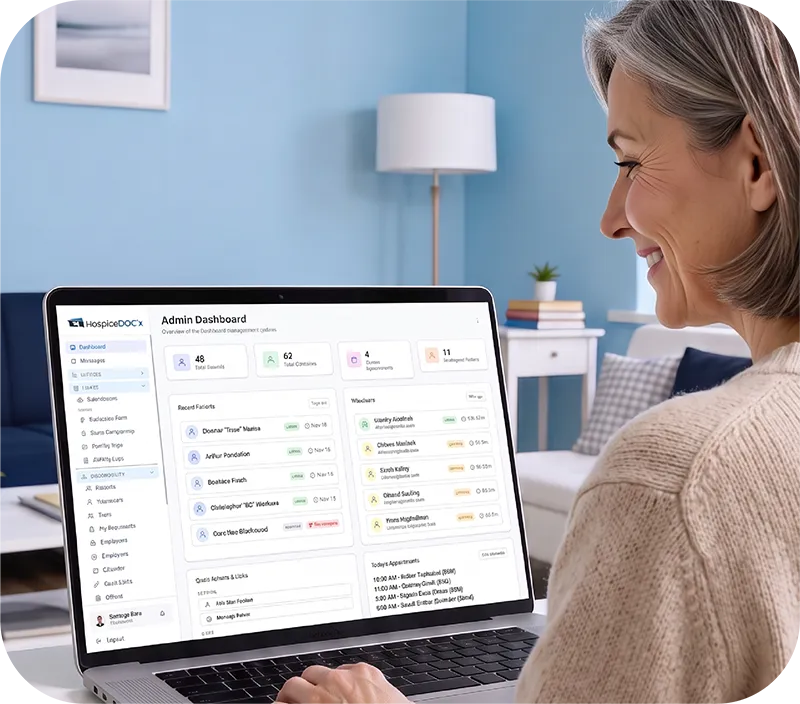
The platform brings volunteer onboarding, records, training, scheduling, patient assignments, visit documentation, volunteer hours, evaluations, and reporting into one organized application.
Rather than maintaining separate spreadsheets and files for each part of the program, coordinators can manage related information within the same environment.
Hospice Docs also provides dashboards and reporting tools that help coordinators and administrators review volunteer activity, service time, documentation, and other program information.
For organizations with multiple locations, the platform supports location-based management and reporting, helping provide visibility across the organization while allowing individual offices to manage their responsibilities. The goal is not to replace the personal attention that makes hospice volunteer programs successful. It is to reduce the administrative work required to support that success.

Spreadsheets can be useful tools, and many hospice volunteer programs rely on them effectively. But as a program grows, the number of records, activities, requirements, and people involved can make spreadsheet-based management increasingly demanding.
The question is not whether spreadsheets are good or bad. It is whether the current system makes it easy for coordinators to do their jobs – and whether the time spent maintaining that system could be put to better use.
When information is connected, documentation is easier to maintain, and reporting requires less manual effort, coordinators can spend more time on the work that depends on human connection. Recruiting volunteers. Building community relationships. Supporting existing volunteers. Helping more people become active and remain engaged.
The real value of better volunteer management isn’t simply spending less time on administration. It’s having more time to build and support a stronger volunteer program.

The easiest way to understand Hospice Docs is to see it in action.
What to Expect?
No technical experience needed.
We’ll guide you through everything.

Have questions about communicating with hospice volunteers through Hospice Docs? Find answers to common questions about direct messaging, announcements, volunteer responses, notifications, and automated reminders
Yes. Coordinators can send direct messages to individual volunteers within Hospice Docs and keep the conversation connected to the platform.
Yes. Announcements can be targeted based on factors such as location, volunteer status, service area, or other applicable groups.
Yes. Announcements can allow volunteers to confirm, decline, or provide another response, giving coordinators visibility into who has replied.
Notifications can support activities such as appointments, form submissions, document requests, status changes, new applications, and other volunteer-program events.
Yes. Automated reminders can help coordinators follow up on upcoming activities and requirements without managing every reminder manually.
Hospice Docs supports in-app and email notifications, depending on the communication being sent and system configuration.

“Having everything organized in one system makes it much easier to manage the volunteer program. I can quickly see what has been completed, what still needs attention, and where follow-up is needed.”
Nicole H. – Volunteer Coordinator
“Hospice Docs has helped simplify many of the routine tasks that used to take extra time. The workflow is easier to manage, and it helps me stay focused on the volunteers instead of the administrative process.”
Jennifer M. – Volunteer Coordinator
“Hospice Docs makes it easy to know what I need to complete and where to find everything. I can keep up with my documents, training, and volunteer activity without feeling overwhelmed by the process.”
Maria S. – Volunteer
“Hospice Docs gives us better visibility into our volunteer program and helps keep important records, requirements, and activity organized. It gives leadership a clearer picture of what is happening across the program and where attention may be needed.”
Mark W. – Executive / Administrator
See how Hospice Docs can help your team reduce administrative work, stay organized, and manage your volunteer program more efficiently.


